

Published in the public interest by JAB Design.
How JAB Design responded to an organised online impersonation campaign
Trust is one of the internet’s greatest strengths. It allows businesses to connect with customers, organisations to share knowledge, and communities to collaborate across borders almost instantly.
Unfortunately, that trust can also be exploited.
Online impersonation has become increasingly sophisticated. Fraudsters no longer rely solely on poorly written emails or obviously fake websites. They can register convincing lookalike domain names, clone entire websites, copy branding and content, and use artificial intelligence to generate realistic communications.
JAB Design experienced this first-hand.
Our company became the target of an organised impersonation campaign involving multiple fraudulent websites and supporting materials designed to mislead members of the public.
While the incident was deeply concerning, it also presented an opportunity.
Rather than quietly documenting the matter internally and moving on, we decided to share what happened openly — not to draw attention to ourselves, but to help others recognise similar warning signs, understand how modern impersonation works, and learn practical ways to protect themselves.
Good design builds trust.
Unfortunately, the appearance of trust can also be manufactured.
The internet runs on trust
Every day, millions of people make decisions based on what they see online.
We visit websites, open emails, click advertisements, read reviews, communicate through messaging platforms, and respond to organisations that appear familiar. Most of the time, those interactions are genuine. Occasionally, they are not.
Modern fraudsters understand that people naturally trust familiar brands, professional-looking websites, and polished communications. Instead of creating something obviously suspicious, they imitate legitimate organisations so convincingly that even experienced internet users may not immediately notice the difference.
This is no longer simply a cybersecurity issue. It is a trust issue.
As a strategy-led branding and creative agency, this experience reinforced something we have long believed: good branding helps people recognise and trust an organisation.
Ironically, those same qualities can be exploited when fraudsters imitate legitimate businesses for dishonest purposes.
Professional-looking websites, convincing copywriting, familiar logos, and polished graphics are no longer reliable proof of authenticity.
Appearance alone is no longer enough.
What happened?
An organised impersonation campaign created multiple fraudulent websites and lookalike domain names designed to resemble JAB Design.
These websites reproduced elements of our online identity — including our branding, page layouts, written content, and visual presentation — making them appear convincing at first glance.
The objective was not merely to copy our website. It was to create sufficient confidence for visitors to believe they were interacting with the genuine JAB Design.
Rather than appearing as crude imitations, the fraudulent websites were professionally presented and closely resembled the legitimate organisation they sought to imitate.
That is precisely why awareness matters.
Why we are sharing this
Many businesses choose not to speak publicly about online impersonation.
Some quietly remove fraudulent websites after they disappear. Others simply move on once the immediate problem has been addressed.
We have chosen a different approach.
This page exists to:
- help members of the public verify suspicious websites or communications claiming to represent JAB Design;
- educate visitors about how modern impersonation campaigns operate;
- encourage independent verification before responding to unfamiliar communications;
- share practical lessons that may benefit members of the public and organisations alike; and
- contribute, in a small way, to broader public awareness of online scams.
Our experience is only one example.
Unfortunately, businesses of every size and across every industry have become targets of increasingly sophisticated impersonation attempts.
If documenting our experience helps even one person avoid becoming the victim of a similar scam, then something positive has come from an otherwise unfortunate incident.
At a glance
- Fraudulent websites and lookalike domains were created to impersonate JAB Design.
- The impersonation extended beyond cloned websites to create multiple layers of apparent legitimacy.
- Members of the public independently verified suspicious communications and helped uncover the campaign.
- A police report was lodged, and public advisories were issued.
- JAB Design Pte Ltd is our company name. jab.sg is our official website.
- If in doubt, pause, verify independently, and contact us through jab.sg.
Trust should never depend on appearance alone.
It should always be independently verified.
Beyond website cloning
At first glance, this incident may appear to have been about copied websites and lookalike domain names. It wasn’t.
The cloned websites were only one component of what appeared to be a broader effort to establish credibility and gain the confidence of potential victims.
As our investigation progressed, it became apparent that the impersonation extended beyond the public-facing websites.
Materials brought to our attention suggested the unauthorised reproduction of supporting corporate and regulatory documents intended to reinforce the perceived legitimacy of the operation. These included:
- documents purporting to be issued or certified by the Accounting and Corporate Regulatory Authority (ACRA);
- JAB Design company letterhead;
- a director’s signature; and
- a company rubber stamp.
The use of regulatory-looking and corporate materials suggested that the objective was not merely to imitate our online presence, but to construct an entire chain of apparent legitimacy.
Viewed individually, each document may have appeared routine. Viewed collectively, they created multiple layers of apparent authenticity, giving recipients greater confidence that they were dealing with a legitimate organisation.
That observation fundamentally changed our understanding of what we were dealing with.
This was not simply website cloning.
It appeared to be an attempt to engineer trust.
Why clone a website?
This experience taught us an important lesson: fraudsters rarely clone a website simply for the sake of copying it. The website is merely the starting point.
The real objective is to create confidence by combining familiar signs of legitimacy:
- professional branding and recognisable logos;
- well-written corporate copy;
- official-looking documents and signatures;
- regulatory-looking paperwork; and
- company stamps and other business credentials.
Each element reinforces the next. Together, they create a convincing impression:
“This organisation looks legitimate.”
That impression can then shape behaviour:
Familiarity creates confidence.
Confidence encourages trust.
Trust influences decisions.
Understanding this progression is one of the strongest defences against modern impersonation campaigns.
Scammers rarely clone for the sake of cloning.
They clone to create confidence.
Confidence leads to trust.
Trust leads to action.
Known fraudulent websites & lookalike domains
The following domains are not operated by JAB Design.
They are published intentionally — not to publicise fraudulent websites, but to help members of the public verify suspicious domains they may have encountered and to demonstrate how convincing modern impersonation can appear.
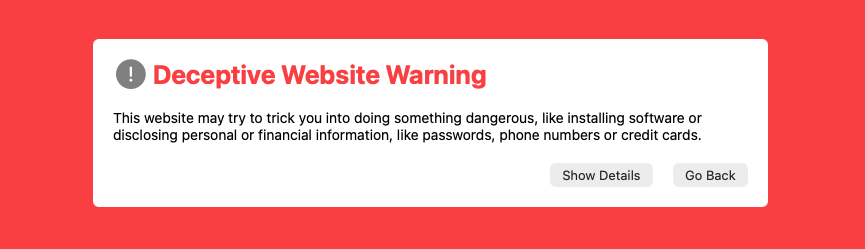
Some of these domains may no longer be active. They remain documented here because awareness is one of the strongest forms of protection.
www.jabdesigninbrands.comwww.jabdesigngowork.comwww.jabdesignwork.comwww.jabdesignsg.comwww.jabdesignweb.comwww.jabdesignwebs.com
The domains above illustrate how online impersonation often relies on names that appear familiar or legitimate at first glance.
These domains were not randomly chosen. They were deliberately registered to appear associated with JAB Design.
Some incorporated our company name directly. Others added additional words or variations that could appear plausible at first glance.
However, our official company website has always been simply jab.sg.
JAB Design Pte Ltd is our company name.
jab.sg is our official website.
That distinction matters.
This is a common tactic used in online impersonation. A domain name that merely sounds right is not necessarily the right one. Always verify the organisation’s official website independently.
Modern impersonation is multi-layered
Many people assume fraudulent websites are easy to recognise. Unfortunately, that is no longer the case.
Today’s impersonation campaigns often involve much more than a copied domain name. Entire websites can be recreated with remarkable accuracy, including:
- brand colours and typography;
- photography and written content;
- articles and case studies;
- corporate documents and regulatory references; and
- email signatures and company branding.
Each element reinforces the others. The result is not merely a cloned website, but a carefully constructed appearance of legitimacy.
The website wasn’t the destination.
It was the doorway to building trust.
Spoofing: when appearance is no longer enough
Websites are only one part of the picture.
Fraudsters may also impersonate organisations through email, messaging platforms, advertisements, and social media profiles.
Some communications appear to originate from familiar organisations even though the underlying source is entirely different. Common forms of imitation include:
- imitated display names;
- copied email signatures;
- reused logos; and
- official-looking documents.
Professional-looking branding is no longer proof of authenticity.
That is why independent verification remains so important.
If something does not feel right, do not continue the conversation using the same email, message, or website.
Instead, start a completely new conversation using contact information that you obtain independently, such as an official website, a trusted telephone number, or another verified communication channel.
Don’t continue the conversation.
Start a new one through a trusted, independently verified channel.
Artificial intelligence has changed the landscape
Artificial intelligence has made online impersonation more convincing than ever before.
Professional copywriting, realistic graphics, polished websites, and persuasive communications can now be generated quickly and at scale.
Technology itself is neither good nor bad. Its impact depends on how it is used:
- Used responsibly, AI enables businesses, educators, and creators to work more efficiently and communicate more effectively.
- Used irresponsibly, it can make impersonation more convincing and more difficult to detect.
As AI continues to evolve, critical thinking, healthy scepticism, and independent verification become increasingly valuable.
Trust requires verification
As a strategy-led branding and creative agency, we believe good branding should inspire confidence.
This experience reminded us that confidence should never rely solely on appearance.
Good branding can be imitated.
Trust cannot.
The strongest protection remains the willingness to pause, ask questions, and verify independently before taking action.
Professional appearance should invite confidence.
It should never replace independent verification.
We didn’t discover the scam. The public did.
Ironically, we were not the first to discover the impersonation. The initial warnings came from observant members of the public.
They had encountered websites and communications that appeared to represent JAB Design, yet something did not feel quite right.
Rather than accepting what they saw at face value, they:
- paused;
- questioned what they were seeing; and
- chose to verify it independently.
Instead of continuing through the suspicious website or communication, they contacted us directly using trusted channels they already knew or located independently:
- our official Contact page;
- email and WhatsApp;
- Facebook Messenger; and
- LinkedIn.
Each enquiry carried essentially the same question:
“Is this really JAB Design?”
Those simple questions became the turning point.
They didn’t trust what they saw.
They verified it independently.
Independent verification changed everything
Those independent enquiries enabled us to recognise that something much larger was taking place.
What initially appeared to be an isolated incident soon revealed itself to be a coordinated impersonation campaign involving multiple fraudulent websites, lookalike domain names, and supporting materials designed to reinforce the appearance of legitimacy.
Several members of the public voluntarily helped by sharing:
- screenshots of what they had encountered;
- links to suspicious websites;
- copies of relevant communications; and
- other information that helped establish the nature and scale of the impersonation.
This provided important context, supported our investigation, and contributed to the evidence subsequently provided to the relevant authorities.
Without those independent enquiries and the information generously shared with us, the fraudulent operation might have remained active for considerably longer.
The experience reinforced an important lesson: cybersecurity is not solely about technology. It is also about people making thoughtful decisions.
Every person who paused before acting became part of the solution.
The strongest firewall is often an observant person willing to ask one simple question:
“Is this genuine?”

Taking action
Once the impersonation had been confirmed, we moved quickly to minimise potential harm and protect members of the public.
Our immediate priorities were to:
- document the fraudulent websites and communications;
- preserve supporting evidence;
- verify enquiries and reassure members of the public through our official communication channels;
- publish public advisories across our communication platforms;
- encourage reports through ScamShield;
- monitor additional impersonation attempts as they emerged; and
- lodge a police report.
While we are intentionally withholding certain operational details, some of the supporting materials formed part of the information provided to the relevant authorities.
Throughout the incident, our priorities remained clear:
- protect the public;
- protect our clients; and
- protect the integrity of our brand.
Reporting helps everyone
One of the messages we shared publicly during the incident remains just as relevant today.
Reporting scams isn’t just about protecting yourself.
It’s about helping the whole community stay safe.
Every report contributes another piece of information that may help identify patterns, connect related incidents, and disrupt fraudulent operations.
What may appear insignificant on its own can become an important part of a much larger picture when combined with reports from others.
That is why we strongly encourage anyone who encounters suspicious websites, emails, or communications to report them through ScamShield, Singapore’s national anti-scam platform.
Helping others often begins with taking a few moments to report what you have seen.
A community effort
Looking back, what stands out most is not the sophistication of the impersonation. It is the willingness of ordinary people to stop, think, and verify.
When something did not feel right, they:
- did not make assumptions;
- did not ignore their instincts; and
- reached out through trusted channels.
Without realising it, they became part of the solution.
Their vigilance enabled us to respond quickly, document the incident, preserve evidence, lodge a police report, publish public advisories, and alert others.
In many ways, this page exists because they chose to ask one simple question before taking the next step.
Don’t continue the conversation.
Start a new one through a trusted, independently verified channel.
How to protect yourself
Online impersonation continues to evolve.
Fortunately, many scams can be disrupted simply by slowing down and independently verifying what you have received before taking any action.
If something feels unusual, trust your instincts:
- Pause first.
- Verify independently.
- Then decide.
Never trust a communication simply because it looks professional.
Verify it independently.
A simple verification checklist
Whenever you receive an unexpected email, message, phone call, or invitation claiming to represent a business or organisation, consider the following:
- Does the website address exactly match the organisation’s official domain?
- Are you replying using contact details obtained independently, rather than those provided in the suspicious communication?
- Is there unusual urgency or pressure to act immediately?
- Are you being asked to move the conversation onto another platform?
- Are you being invited to join a WhatsApp, Telegram, or other messaging group for promotional work, brand ambassador programmes, influencer campaigns, online tasks, or investment opportunities that you did not independently apply for or verify?
- Does the request seem inconsistent with what the organisation would normally do?
- Have you independently verified the request through another trusted communication channel?
One or two warning signs may not always indicate a scam.
However, multiple warning signs should always prompt further verification.
In this incident, individuals received unexpected invitations for promotional work and brand ambassador opportunities before being invited into messaging groups and subsequently directed elsewhere.
JAB Design does not recruit promoters, brand ambassadors, influencers, or similar roles through unsolicited messaging groups or unofficial approaches.
If you receive an unexpected invitation claiming to represent JAB Design, please verify it independently through jab.sg before responding, joining any group, or downloading any application.
Legitimate opportunities should never discourage independent verification.
Break the chain
One of the most effective ways to protect yourself is remarkably simple: do not continue the existing conversation.
Instead, begin an entirely new one:
- If you receive a suspicious email, don’t reply to it.
- If you receive a suspicious message, don’t continue the chat.
- If you encounter a suspicious website, don’t rely on the contact information shown there.
Independently locate the organisation’s official website or publicly listed contact details, then initiate a completely new conversation.
That single step breaks the chain of trust that scammers work so hard to create.
What if it involves JAB Design?
If you receive any communication claiming to represent JAB Design and you are unsure whether it is genuine, we encourage you to contact us directly.
We would much rather answer one additional enquiry than have someone become the victim of a scam.
Please verify independently through our official website:
Do not rely solely on links or contact details contained within suspicious communications.

Report it
Reporting suspicious activity helps protect more than just yourself.
It helps identify patterns, connects related incidents, and may prevent others from becoming victims.
If you encounter a suspicious website, message, or communication, consider reporting it through:
- ScamShield;
- Singapore Police Force, if appropriate; or
- the organisation being impersonated.
Every report contributes to a safer online community.
See something suspicious?
Pause. Verify. Report.
Trust is built over time
As a strategy-led branding and creative agency, we spend years helping organisations build trust.
This experience reminded us that genuine trust cannot be created overnight — even though the appearance of trustworthiness sometimes can.
Today, familiar signs of credibility can be reproduced quickly:
- professional websites can be copied;
- logos can be imitated;
- documents can be fabricated; and
- artificial intelligence can generate convincing communications.
But genuine trust is earned through consistent actions, real relationships, and transparency over time.
That remains the strongest defence against impersonation.
Good branding earns trust.
Great judgement protects it.
Thank you
This page exists because members of the public chose to verify independently rather than simply trust what they saw.
They contacted us through trusted channels and voluntarily shared screenshots, website links, and other information that helped us understand the nature and scale of the impersonation.
Their vigilance enabled us to respond quickly, preserve evidence, publish public advisories, and lodge a police report.
Without realising it, they became part of the solution. For that, we are sincerely grateful.
Cybersecurity is often viewed as a technological challenge. Our experience reminded us that it is equally a community effort.
Every person who pauses, verifies, or reports helps make the internet safer for everyone.
Trust should never depend on appearance alone.
It should always be independently verified.

Continuing vigilance
Online impersonation continues to evolve.
This page may therefore be updated from time to time as new information becomes available, additional fraudulent websites are identified, or public safety guidance changes.
We hope it continues to serve as a useful resource for anyone seeking to verify suspicious communications or better understand modern impersonation scams.
If you are here to verify JAB Design
You may have arrived here because you wanted to confirm whether a communication, website, or document claiming to represent JAB Design is genuine.
If so, you have already taken an important first step.
When something does not feel right, there is no harm in pausing to verify it independently.
We would much rather answer one more enquiry than have someone proceed based on incorrect information or become the victim of fraud.
If you are still unsure, please contact us directly through the official contact details published on https://jab.sg.
If this page caused you to pause before taking the next step, it has already served its purpose.
More About What We Do
Our creative expertise spans four core disciplines:
Need help? Tell us about your project — email us or use our contact form.
Originally published: September 2025
Last substantially revised: October 2026

